❮
![Large Image]() ❯
❯
1st & 7th United States Infantry - Gettysburg Commander
Item CDV-11626
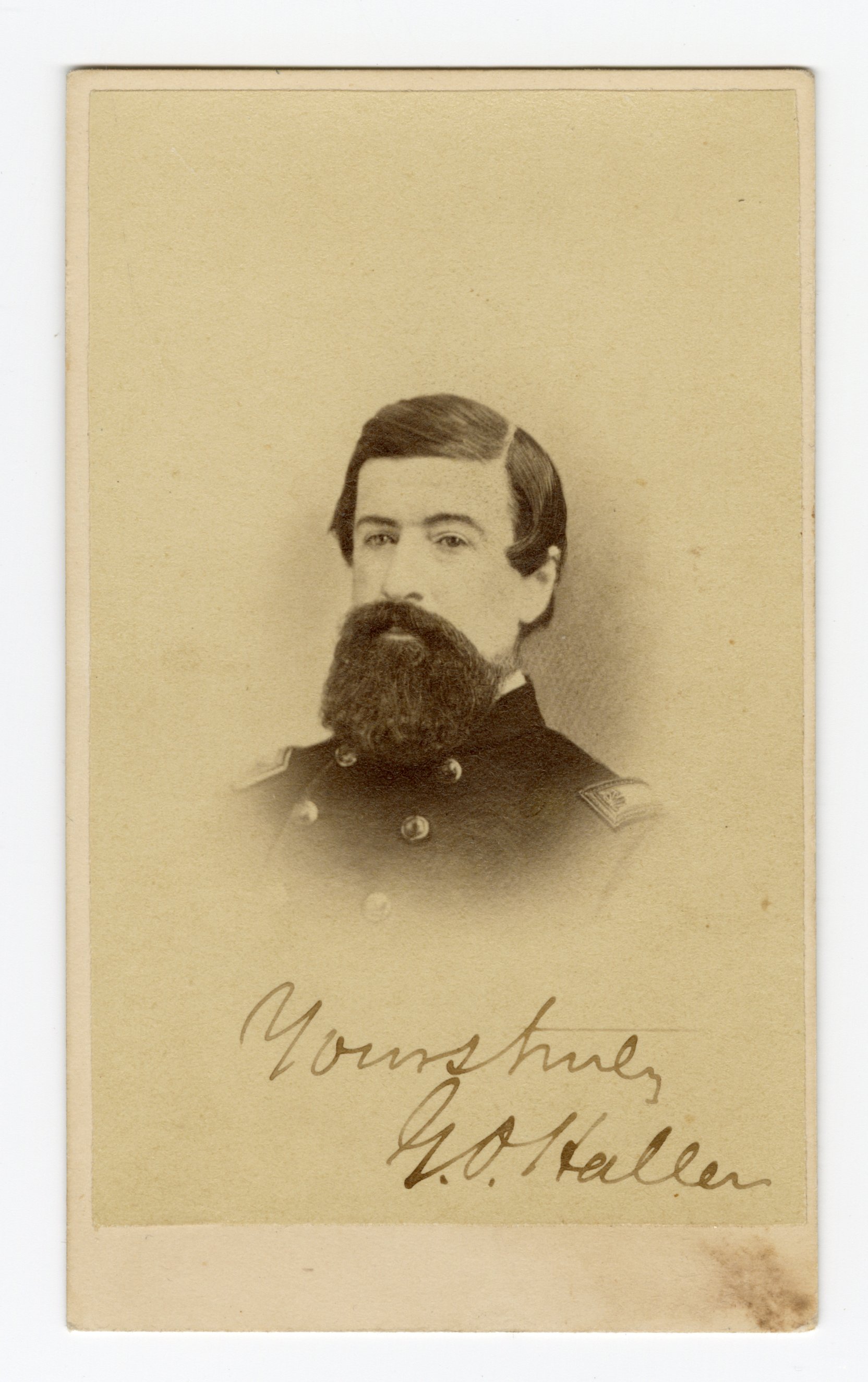
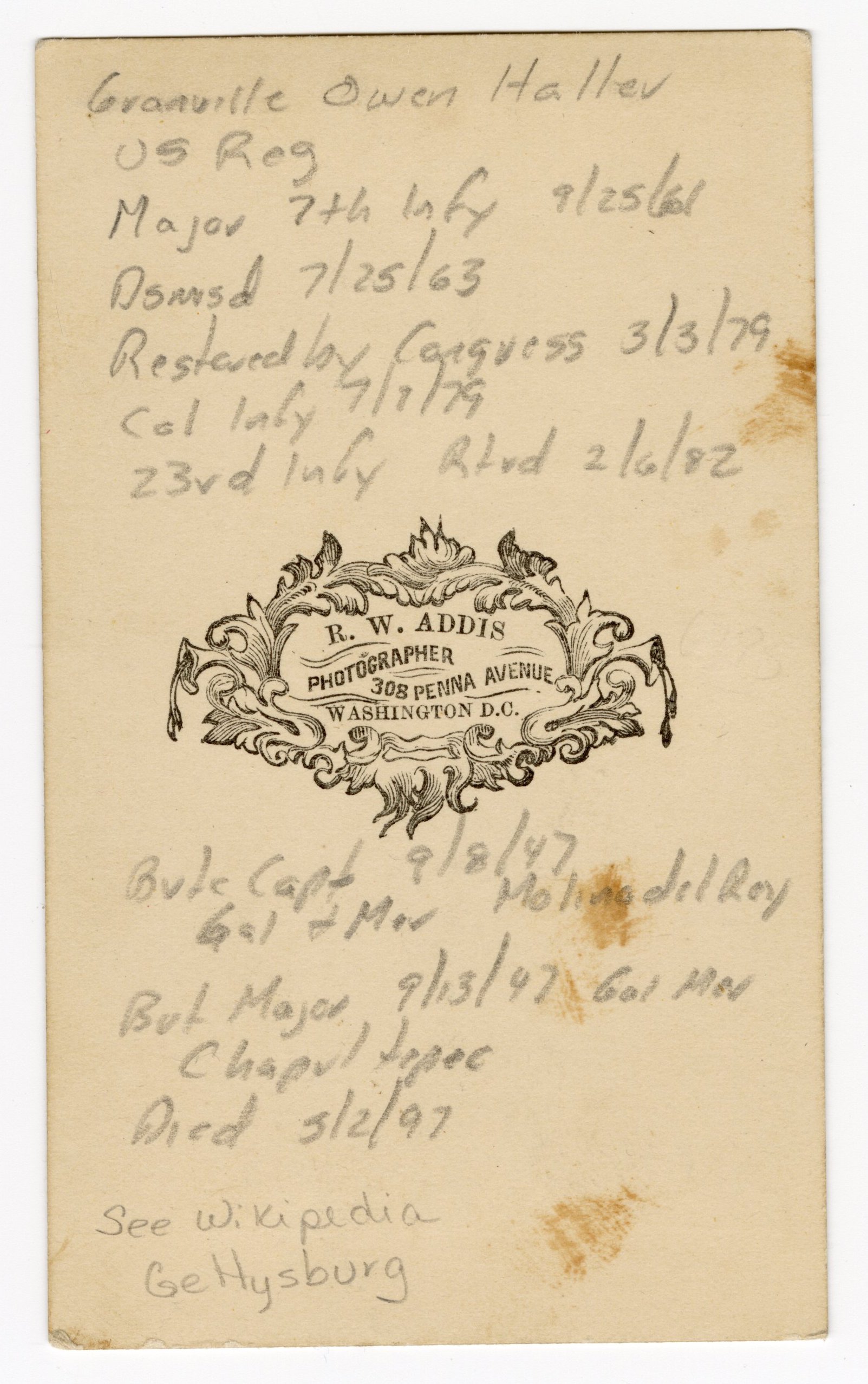
Granville O. Haller
Price: $725.00
Description
Granville Owen Haller (January 31, 1819 – May 2, 1897) was a noted Indian fighter, United States Army officer, and wealthy post Civil War businessman who settled in northwest Washington state. During the American Civil War, he was charged with the defense of south-central Pennsylvania during the early days of Gettysburg campaign prior to the arrival of the Army of the Potomac.After the Civil War started, Haller commanded George B. McClellan's headquarters guard during the Peninsula Campaign and again in the Maryland Campaign. In May 1863, he returned to his native York to recover from illness contracted in the field. In June, Maj. Gen. Darius N. Couch appointed Haller to command the defenses of Adams and York counties in south-central Pennsylvania. During the Gettysburg campaign, Haller retreated from Gettysburg to Wrightsville, Pennsylvania, where his militia and that of Col. Jacob G. Frick burned the Columbia-Wrightsville Bridge to prevent passage over the Susquehanna River by a Confederate brigade under John B. Gordon.
Accused by naval officer Lt. Clark Henry Wells of disloyal conduct and sentiments after the Battle of Fredericksburg, Haller was dismissed from the Army in July 1863. Wells alleged that Haller had toasted him "Here's to a Northern Confederation and a Southern one while Lincoln is President", blamed the President for casualties at Fredericksburg, and in a later dispute offered that a "Black Republican" would be a more suitable quarters-mate for him; Haller denied giving such a toast entirely, and protested that he did not blame the government for "disasters" at Fredericksburg but only the change in strategy caused by Lincoln's removal of General George B. McClellan. He and his wife eventually returned to the American West, settling on Whidbey Island in Coupeville, Washington Territory in 1866 where he built a home on Front Street and started a business that extended credit to pioneer families. In 1879, Haller's case of dismissal was re-examined by Congress. Following a six-day long court of inquiry in Washington, D.C., he was exonerated and his commission reinstated with a promotion to colonel.
Following the reinstatement, Haller accepted assignments to the Indian Territory in Oklahoma and sold his assets in Coupeville. After retiring from the Army in 1882, Haller returned to the Pacific Northwest and settled in Seattle where he built a three-story, eighteen-room mansion named "Castlemount" and became part of the growing city's business and industry community.
Source: Wikipedia