❮
![Large Image]() ❯
❯
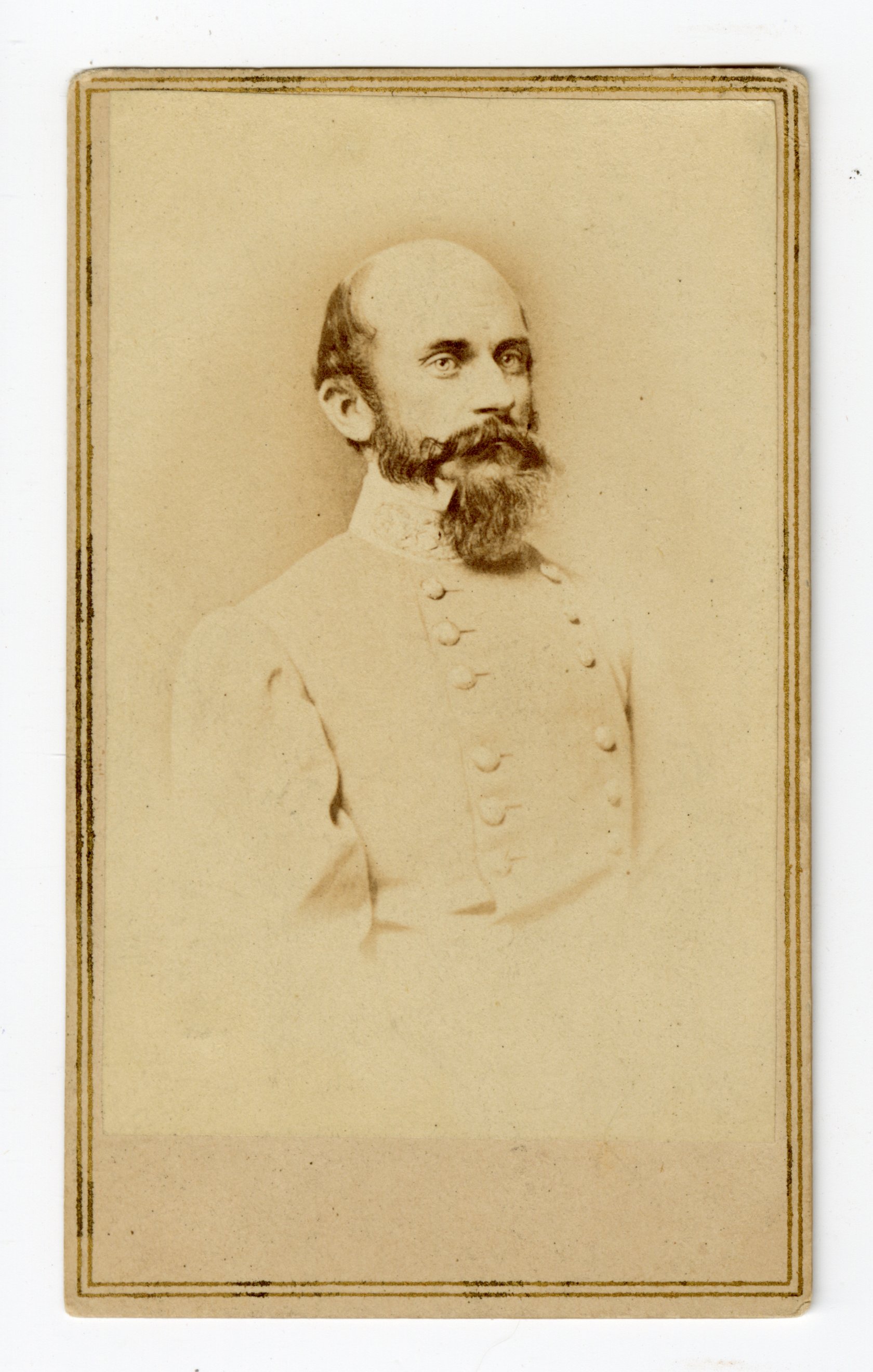
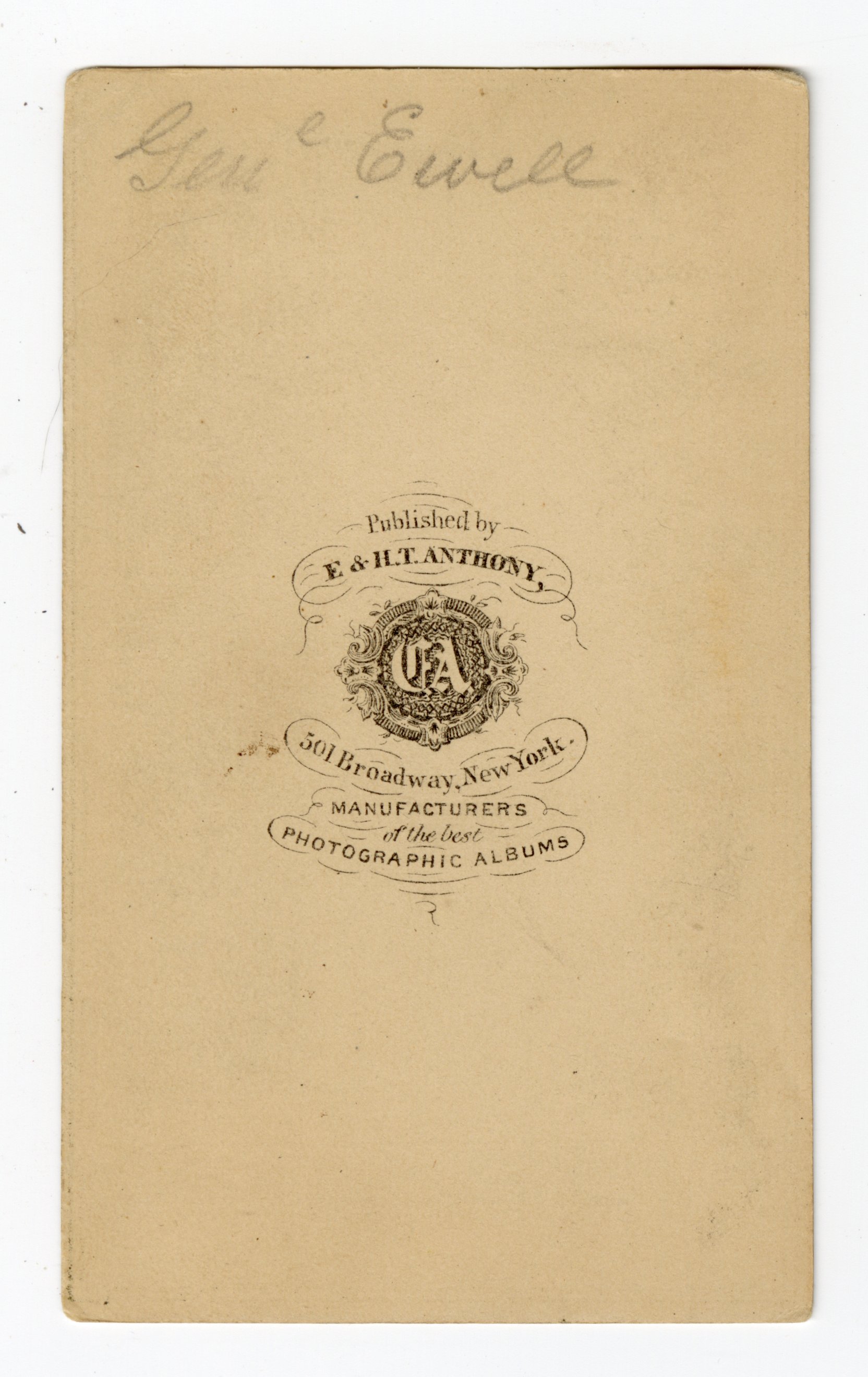
Richard S. Ewell - Corps Commander at Gettysburg
Item CON-11507
Price: $485.00
Description
Ewell resigned from the U.S. Army on May 7, 1861, to join the Provisional Army of Virginia. He was appointed a colonel of cavalry on May 9 and was the first officer of field grade wounded in the war at a May 31 skirmish at Fairfax Court House. He was promoted to brigadier general in the Confederate States Army on June 17 and commanded a brigade at the First Battle of Bull Run. Hours after the battle, Ewell proposed to President of the Confederate States of America Jefferson Davis that for the Confederacy to win the war, enslaved people must be freed and join the ranks of the army; he was also willing to lead black soldiers into battle. But Davis considered that "impossible", and that topic never came up between him and Ewell again.Ewell was promoted to major general and division command on January 24, 1862. When Joe Johnston's army pulled out of the Manassas area in March and went down to Richmond, Ewell's division was stationed around Culpeper. In May, he was ordered to the Shenandoah Valley to reinforce "Stonewall" Jackson. Ewell superbly commanded a division in Jackson's small army during the Valley Campaign, personally winning quite a few battles against the larger U.S. armies of Maj. Gens. Nathaniel P. Banks, John C. Frémont, and James Shields at the Battle of Front Royal and First Battle of Winchester, Battle of Cross Keys, and Battle of Port Republic, respectively.
Jackson's army was then recalled to Richmond to join Robert E. Lee in protecting the city against Maj. Gen. George B. McClellan's Army of the Potomac in the Peninsula Campaign. Ewell fought conspicuously at Gaines' Mill and saw relatively light action at Malvern Hill. After Lee repelled the U.S. army in the Seven Days Battles, U.S. Maj. Gen. John Pope's Army of Virginia threatened to attack from the north, so Jackson was sent to intercept him. Ewell defeated Banks again at the Battle of Cedar Mountain on August 9, and, returning to the old Manassas battlefield, he led his division into action at Brawner's Farm on August 28. A Minie ball shattered Ewell's left leg, and he lay on the ground for several hours before being found and taken away. Ewell's leg was amputated, and he faced a painful recovery lasting months. Although he received a wooden leg, the irregular shape of the leg stump made it difficult to fit it.
Ewell returned to Lee's Army of Northern Virginia after the Battle of Chancellorsville. After the mortal wounding of Jackson at that battle, on May 23, Ewell was promoted to lieutenant general and command of the Second Corps. Ewell was given a date of rank one day earlier than Hill's, so he became the third-highest-ranking general in the Army of Northern Virginia, after Lee and James Longstreet.
Ewell continued to have difficulty walking and needed crutches when not mounted on horseback. In the opening days of the Gettysburg Campaign, at the Second Battle of Winchester, Ewell performed superbly, capturing the U.S. garrison of 4,000 men and 23 cannons. He escaped severe injury there when he was hit in the chest with a spent bullet. His corps took the lead in the invasion of Pennsylvania and almost reached the state capital of Harrisburg before being recalled by Lee to concentrate at Gettysburg. These successes led to favorable comparisons with Jackson.
But at the Battle of Gettysburg, Ewell's military reputation started a long decline. On July 1, 1863, Ewell's corps approached Gettysburg from the north and smashed the U.S. XI Corps and part of the I Corps, driving them back through the town and forcing them to take up defensive positions on Cemetery Hill south of town. Lee had just arrived on the field and saw the importance of this position. He sent discretionary orders to Ewell that Cemetery Hill be taken "if practicable." Ewell chose not to attempt the assault.
Lee's order has been criticized because it left too much discretion to Ewell. Ewell's critics have noted that this failure of action on his part, whether justified or not, ultimately cost the Confederates the battle.
On July 3, Ewell was again wounded, but only in his wooden leg. He led his corps on an orderly retreat back to Virginia. By late November, Ewell took a leave of absence due to fever and continued problems with his leg. Within a month, he returned to command but struggled with his health and mobility. He was bruised in a fall from his horse in January 1864.
Ewell led his corps in the May 1864 Battle of the Wilderness and performed well, enjoying a slight numerical superiority over the U.S. corps that attacked him. In the Battle of Spotsylvania Court House, Lee felt compelled to lead the defense of the "Mule Shoe" on May 12 personally because of Ewell's indecision and inaction. In the final combat at Spotsylvania, on May 19, 1864, Ewell ordered an attack on the U.S. left flank at the Harris Farm, which had little effect beyond delaying Grant for a day, at the cost of 900 casualties, about one-sixth of his remaining force.
Lee felt that Ewell was not in any shape for field command and decided to reassign him to the Richmond defenses. Ewell and his troops were then surrounded and captured at Sailor's Creek. He was held as a prisoner of war at Fort Warren in Boston Harbor until July 1865.
Source: Wikipedia