❮
![Large Image]() ❯
❯
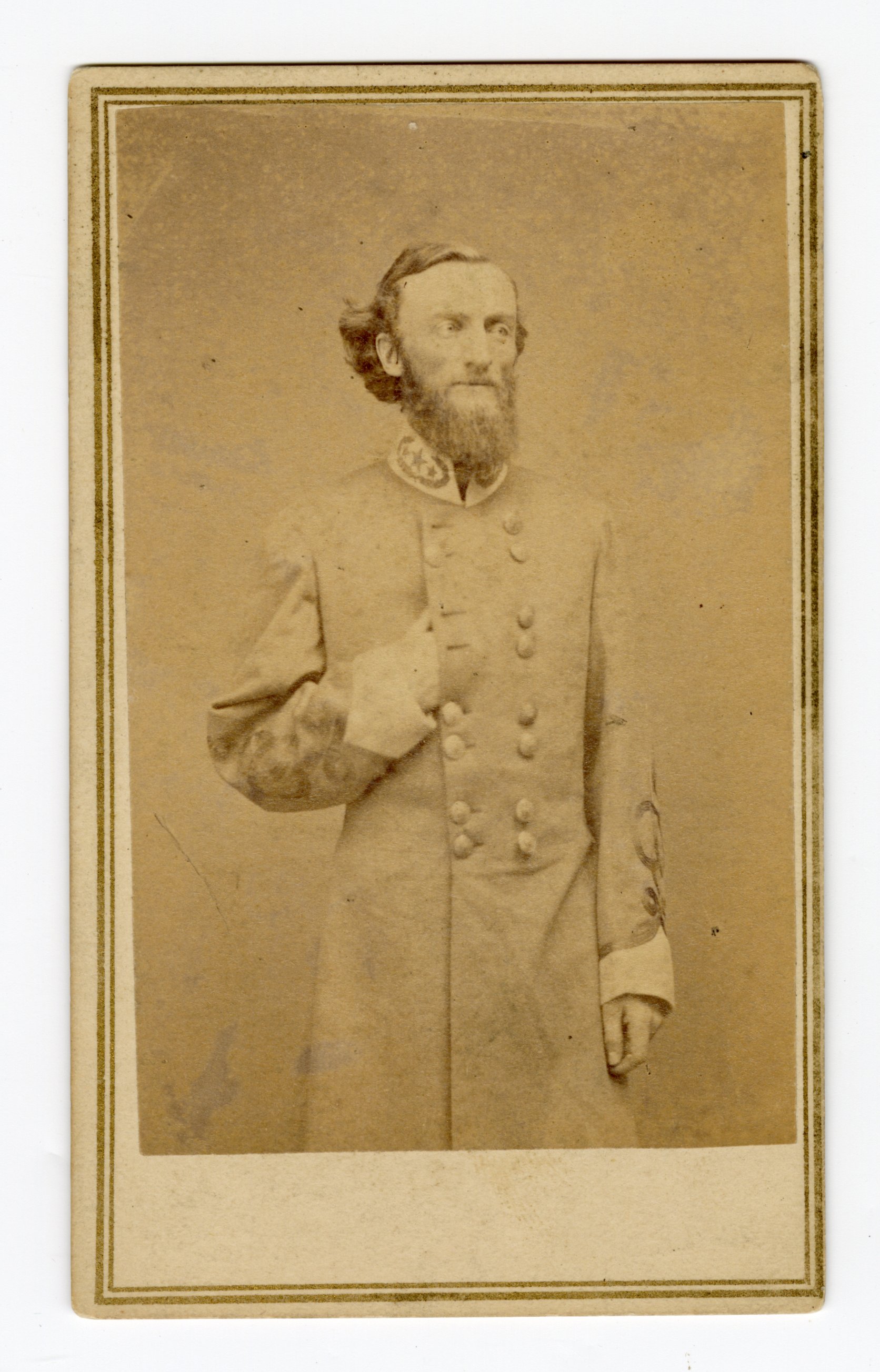
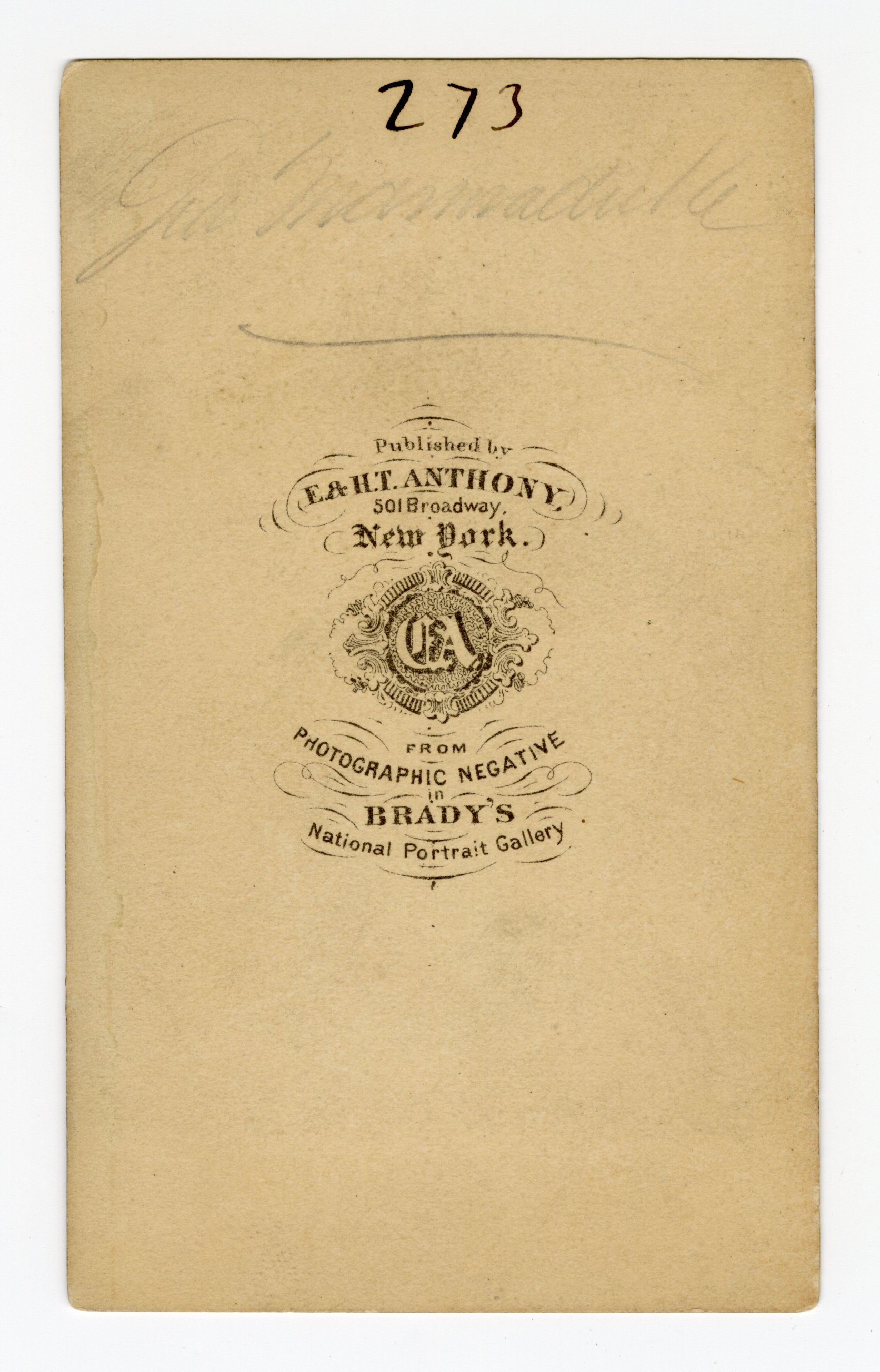
John S. Marmaduke
Item CON-11511
Price: $485.00
Description
John S. MarmadukeMarmaduke was on duty in the New Mexico Territory in the spring of 1861 when he received news that several southern states had declared secession from the United States. He returned home to Missouri to meet with his father, a strong Unionist. Afterward, Marmaduke resigned from the United States Army, effective April 1861. Pro-secession Missouri Governor Claiborne Fox Jackson, Marmaduke's uncle, soon appointed him as the colonel of the 1st Regiment of Rifles, a unit from Saline County, Missouri, in the Missouri State Guard.
Governor Jackson left Jefferson City, Missouri, in June, along with State Guard commander Major-General Sterling Price, to recruit more troops. Marmaduke and his regiment met them at Boonville, Missouri. Within a short time, Price and Jackson left, leaving Marmaduke in charge of a small force of militia. Marmaduke's troops were not adequately prepared for combat, but Governor Jackson ordered him to stand against U.S. forces who had entered the state. U.S. brigadier-general Nathaniel Lyon's 1,700 well-trained and equipped soldiers easily routed Marmaduke's untrained and poorly armed force at the Battle of Boonville on June 17, 1861. The skirmish was mockingly dubbed "the Boonville Races" by Unionists because Marmaduke's forces broke and ran after 20 minutes of battle.
Disgusted by the situation, Marmaduke resigned his commission in the Missouri State Guard and traveled to Richmond, Virginia, where he was commissioned a first lieutenant in the regular Confederate States Army. The Confederate States War Department ordered him to report for duty in Arkansas, where he soon was elected lieutenant-colonel of the 1st Arkansas Battalion. He was on the staff of Lieutenant-General William J. Hardee, a former United States Military Academy instructor of infantry tactics. Marmaduke's former Utah War commander, Albert Sidney Johnston, asked him to join his staff in early 1862. Marmaduke was wounded in action at the Battle of Shiloh as colonel of the 3rd Confederate Regiment, incapacitating him for several months.
In November 1862, the C.S. War Department confirmed Marmaduke's promotion to brigadier-general. His first battle as a brigade commander was at the Battle of Prairie Grove. In April 1863, he left Arkansas with 5,000 men and ten artillery pieces and entered U.S.-held Missouri. However, he was repulsed at the Battle of Cape Girardeau and forced to return to Helena, Arkansas. Controversy soon followed. In September 1863, he accused his immediate superior officer, Brigadier-General Lucius M. Walker, of cowardice in action for not being present with his men on the battlefield. Walker, slighted by the insult, challenged Marmaduke to a duel, which resulted in Walker's death on September 6, 1863.
Marmaduke later commanded a cavalry division in the Trans-Mississippi Department, participating in the Red River Campaign. While commanding a mixed force of Confederate troops, including Native-American soldiers of the 1st, and 2nd Choctaw Regiments, he defeated a U.S. foraging detachment at the Battle of Poison Spring, Arkansas, on April 18, 1864. After the battle, his troops massacred the black soldiers of the 1st Kansas Colored but not the men of the white Union units. He was hailed in the Confederate press for what was publicized as a significant Confederate victory. Marmaduke never was prosecuted for this war crime.
Marmaduke commanded a division in Major-General Sterling Price's Raid in September–October 1864 into Missouri, where Marmaduke was captured at the Battle of Mine Creek, Kansas. While still a prisoner of war at Johnson's Island in Ohio, Marmaduke was promoted to major-general in March 1865. He was released after the war ended.
Source: Wikipedia