❮
![Large Image]() ❯
❯
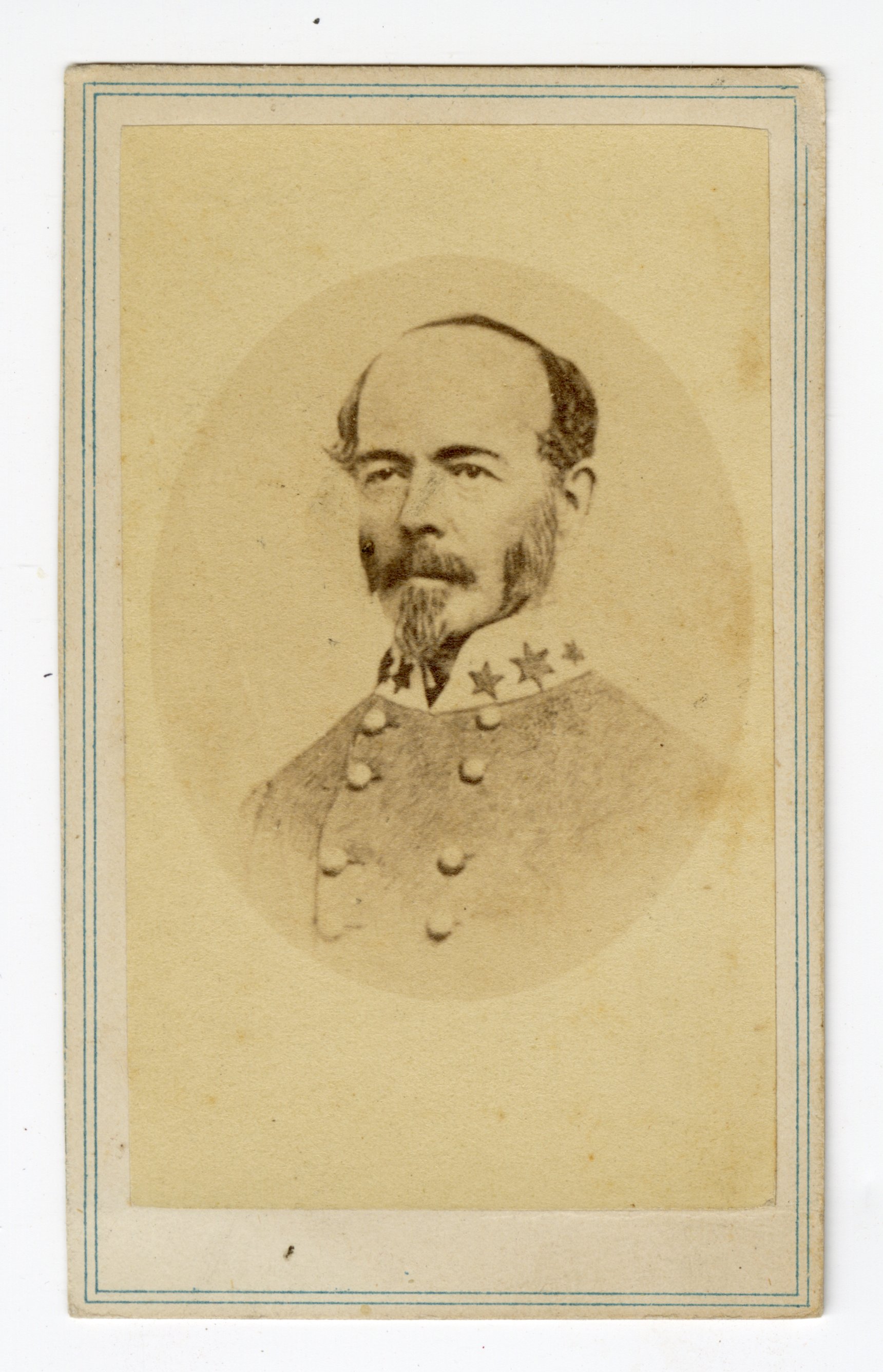
Joseph E. Johnston
Item CON-11515
Price: $175.00
Description
Joseph Eggleston Johnston (February 3, 1807 – March 21, 1891) was an American military officer and politician who served in the United States Army during the Mexican–American War and in the Seminole Wars. After Virginia declared secession from the United States in 1861, he entered the Confederate States Army as one of its most senior general officers during the American Civil War.Johnston was trained as a civil engineer at the United States Military Academy at West Point, New York, graduating in the same class as Robert E. Lee. He later saw frontier service in Florida, Texas, and Kansas and by 1860 he achieved the rank of brigadier general as Quartermaster General of the U.S. Army.
Johnston's effectiveness in the American Civil War was undercut by tensions with Confederate president Jefferson Davis. Victory eluded him in most campaigns he personally commanded. He was the senior Confederate commander at the First Battle of Bull Run in July 1861, but the victory is usually credited to his subordinate, P. G. T. Beauregard. Johnston defended the Confederate capital of Richmond, Virginia, during the 1862 Peninsula Campaign, withdrawing under the pressure of George B. McClellan's superior force. He suffered a severe wound at the Battle of Seven Pines and was replaced by Robert E. Lee.
In 1863, Johnston was placed in command of the Department of the West. In 1864, he commanded the Army of Tennessee against William Tecumseh Sherman in the Atlanta Campaign. In the war's final days, Johnston was returned to command of the few remaining forces in the Carolinas Campaign. U.S. Army generals Ulysses S. Grant and Sherman praised his actions in the war and became friends with Johnston afterward.
After the war, Johnston served as an executive in the railroad and insurance businesses. He was elected as a Democrat in the United States House of Representatives, serving a single term. He was appointed as the federal commissioner of railroads under Grover Cleveland. Johnston died of pneumonia one month after attending Sherman's funeral.
Source: Wikipedia